
Reliable information from the field
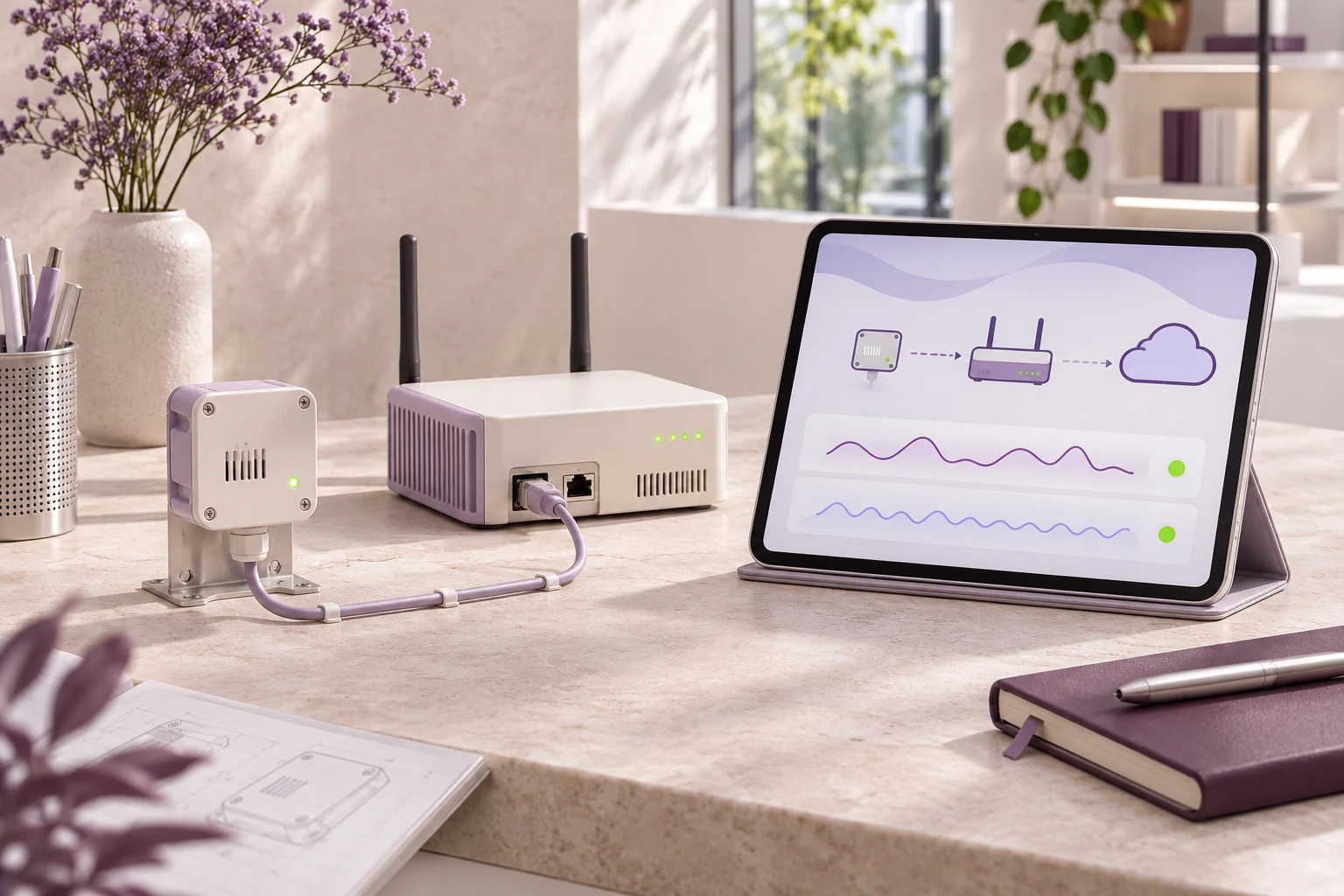
Map sensors, gateways and receiving systems. Define timestamps, units, buffering and retries so operators can distinguish missing data from a normal reading.
IoT development
Bring device readings, operational dashboards and connected workflows together. Define how data is collected, how devices are identified and what should happen when connectivity is interrupted.
A clear scope. Tangible work. A team ready for what comes next.
Map sensors, gateways and receiving systems. Define timestamps, units, buffering and retries so operators can distinguish missing data from a normal reading.
Plan onboarding, credentials, updates and retirement alongside the application. Match cloud and edge responsibilities to connectivity and response-time requirements.
From the first question to the next release, every step has a purpose.
Define the problem, map constraints and agree on what the first release needs to prove.

Map the systems and integrations, then decide where to build, connect or reuse.

Deliver in increments, review working software and build testing and security checks into the release process.

Plan deployment, monitoring and handover before the system goes live.

Help your team operate the system, resolve issues and plan the next release.

Yes, where their interfaces and access allow it. Review the device models, protocols and available documentation before planning the integration.
Define buffering, timestamps, retries and reconciliation. The dashboard should distinguish an offline device from a reading that indicates normal operation.
Compare latency, connectivity, hardware capacity and data-handling requirements. Some workflows need local decisions while others can send readings for central analysis.
Plan device identities, credentials and permissions, including how access changes when a device is replaced or retired.
Share the device specifications, sample readings, target environment and the operational decision those readings should support.
Contact
Tell us what you’re working on and where you need engineering support.