
Design around real tasks
Understand the audience, the task and the point where people need help. Use interviews, existing evidence and prototype testing to challenge assumptions.
UI/UX design
Connect user research, information architecture and interface design to a product people can navigate. Work through the important tasks and exception states before handing designs to engineering.
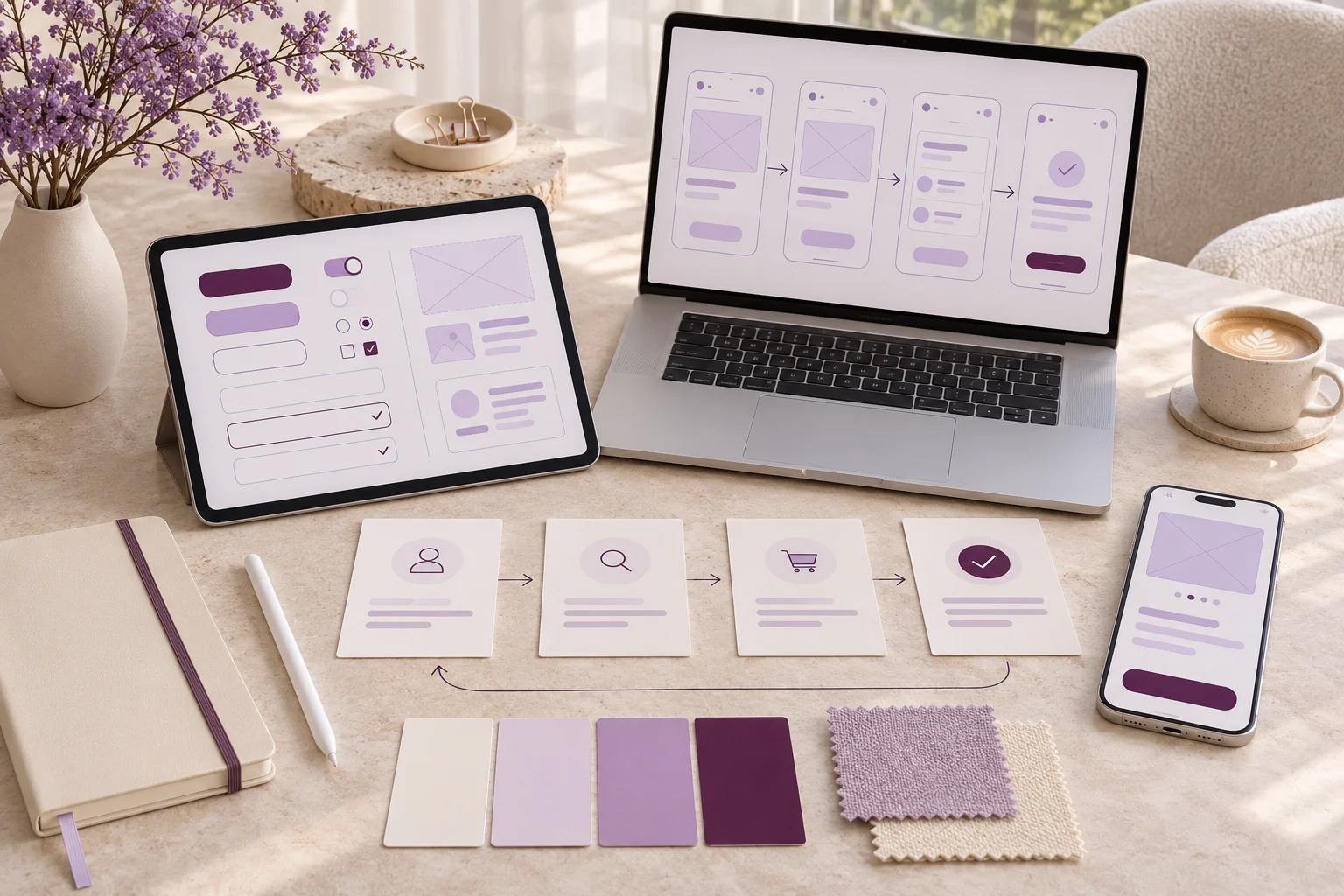
A clear scope. Tangible work. A team ready for what comes next.
Understand the audience, the task and the point where people need help. Use interviews, existing evidence and prototype testing to challenge assumptions.
Include responsive behavior, keyboard interaction, validation, empty states and errors. Review components and edge cases with engineers throughout the work.
From the first question to the next release, every step has a purpose.
Review the audience, current experience, constraints and the decisions the design needs to support.

Organize the information and task flows, including the points where people need help or recovery.

Create interactive prototypes, observe representative tasks and revise the design based on what people do.

Document components, responsive behavior, accessibility requirements and important interaction states.

Review the design with engineers and check implementation details as the product takes shape.

Yes. Start with the user tasks and existing evidence, identify where people struggle and test focused changes before expanding the redesign.
Agree the journeys, responsive layouts, reusable components, interaction states and implementation notes your engineering team needs.
Use representative tasks with the intended audience. Observe completion, confusion and recovery, then revise the prototype based on the findings.
Consider keyboard navigation, focus, contrast, labels, readable content and error handling from the start. The implemented product still needs accessibility verification.
Yes. Review feasibility, component behavior and edge cases together so the design and implementation remain aligned.
Contact
Tell us what you’re working on and where you need engineering support.