
The challenge
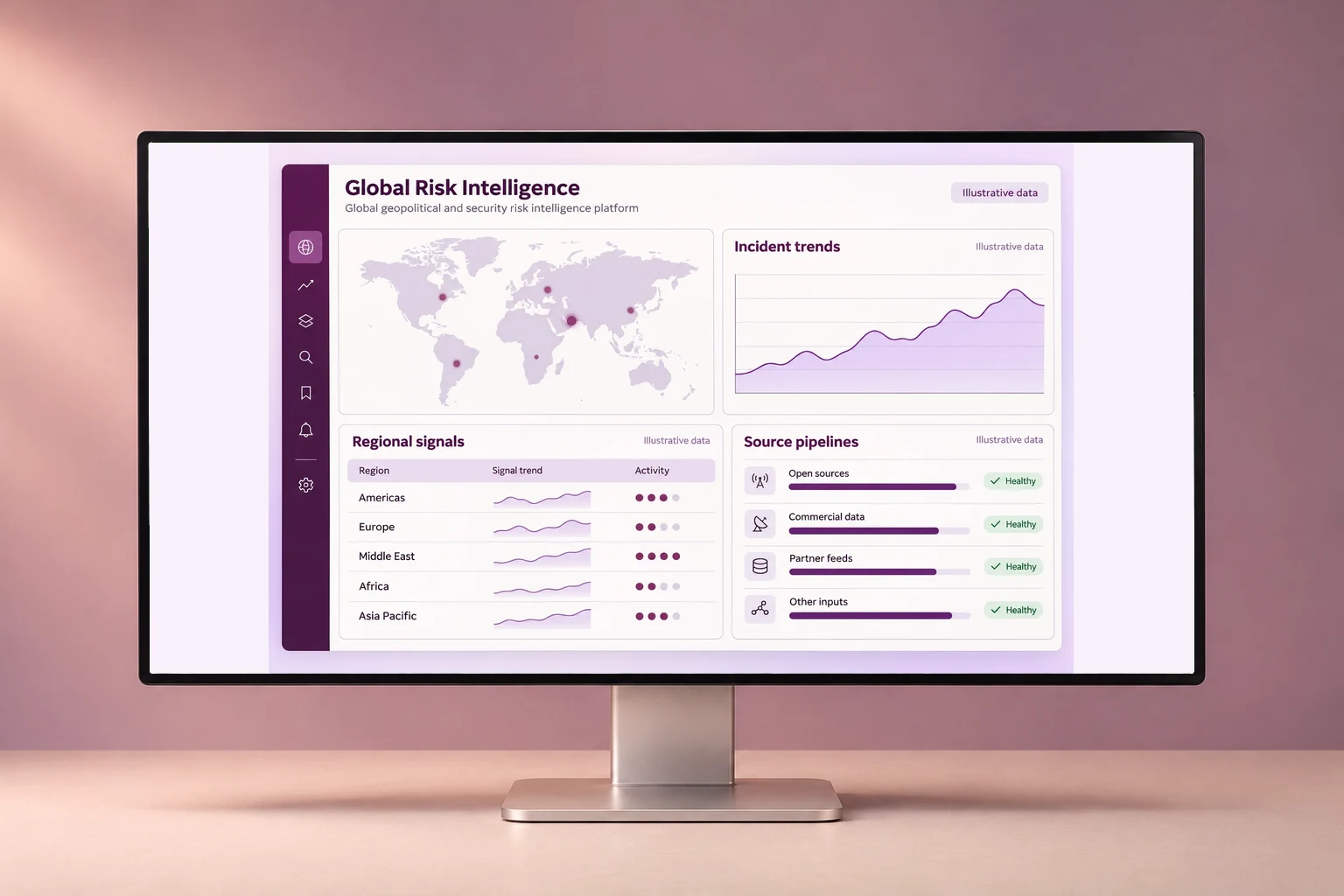
In 2024, the client asked us to modernize an established platform used to track security incidents, geopolitical developments and regional risk. The existing PHP application and its ETL pipelines supported day-to-day intelligence operations and held years of historical data.
The modernization had to preserve those operations while opening the platform to new sources and more varied datasets. The existing warehouse alone was too restrictive for the volume and variety of incoming intelligence data.
The solution
We rebuilt the application on Python and took ownership of the existing ETL pipelines. We stabilized active feeds before adding new sources, then standardized how the pipelines ingest, validate, transform and enrich incoming data.
We introduced a lakehouse for high-volume and semi-structured data alongside a warehouse for curated reporting and analysis. AI-assisted services helped surface patterns and summarize information for analysts assessing security and geopolitical developments.
Our approach
We mapped how data moved from source integrations through the legacy application to analysts and reports. Running old and new components alongside one another let us move individual workflows in stages and maintain access to existing intelligence.
We separated ingestion, transformation, storage and consumption so each could change independently. The lakehouse retained source-level history, while curated warehouse models supported reporting, regional comparisons and risk scoring. Modular APIs gave new sources and analytical services clear integration points.
The results
We delivered the modernized platform in 2025 while keeping existing intelligence operations running. The new application and data architecture gave the client a shared foundation for expanding coverage, bringing in new sources and developing AI-assisted risk analysis.
Key results
- Migrated the enterprise application from PHP to Python in phases.
- Stabilized existing ETL workflows and added extensible ingestion and transformation pipelines.
- Combined a lakehouse and warehouse to serve both source-level intelligence and curated analytics.
- Created integration points for additional data sources, regional risk indicators and AI-assisted analytical services.
Technology & capabilities
- Python
- AWS
- ETL
- Lakehouse
- Data warehouse
- AI / ML
- Business intelligence